
On TDOV
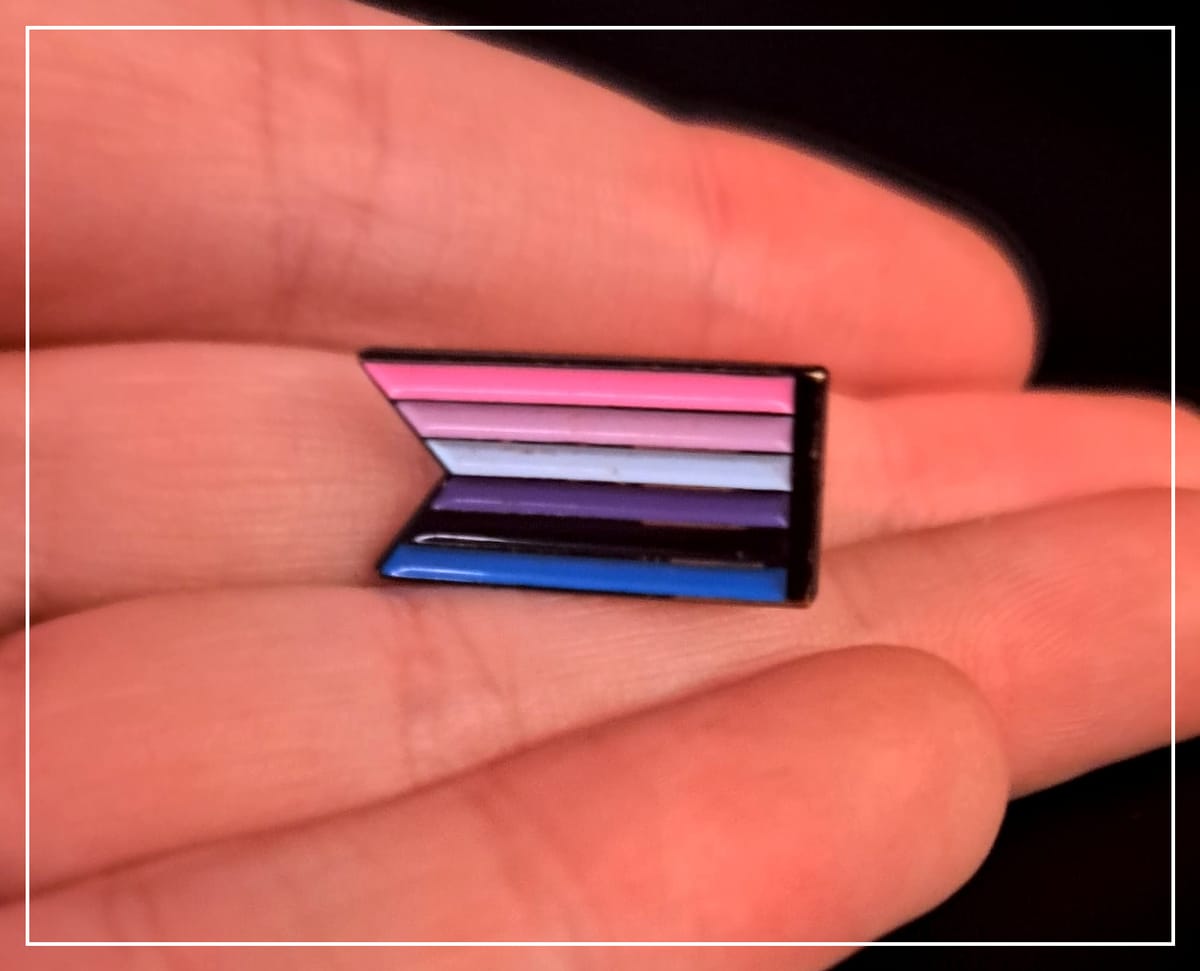
Today is TDOV.
Honestly, I sometimes wish we were a little less visible, or at least in different ways than we tend to be nowadays. For every news story decrying the athletes that dare try to compete among their peers, there is a child being tormented at home for not adhering to the strict, arbitrary rules set forth at birth for good boys and girls. For every openly trans actor who faces public ridicule under the guise of “just asking questions”, there is a professional staring down the social and financial costs of a more public realization of the buzzing, lingering sensation that’s been following them since a loved one made a passing, thoughtless remark. For every comment section of yet another post halfheartedly reporting violence against one of our own, there is an artist, a host, a writer, all haunted by the very idea that their work isn’t honest, isn’t truthful.
I’ve written about this before, elsewhere, but I can’t recall a time when existing as I am wasn’t polarizing in some way. While I’ve been out as queer in some facet for more than a decade now, it has been a series of realizations, not a singular grand proclamation. First, I liked a girl. Then, I cosplayed a male character, and found that I liked how I was treated while in said costume better than being called “miss” or “ma’am.” Several years, relationships, names, and labels later, I tried on something new once more. After a while spent making my own space between a few flags and hormone injections, I dipped a toe into fluidity.
As my face gained a bit of sharpness and I grew hair in unlikely places, I found myself no longer shrinking away from conversations about femininity and “The Before Times.” Once, I referred to the person I was just before having that first gender realization as a Snow White-esque figure, kept safe “asleep” in a glass coffin, the princess ideal I could’ve never lived up to. Looking back at pictures of me from those early high school years, there was clear, keen discomfort in the way I gingerly carried my gangly limbs, in the hunched shoulders as I found a corner of a classroom or library to hide in, scrawling fanfic into hand-collaged composition books.
Coming out for me was gradual—a few friends started calling me a name that felt less heavy, a hand-me-down binder was gifted to me, wrapped in off-season reindeer wrapping paper. A friend’s mother secretly bestowed upon me a boxed set of a plain, black dress shirt and modern striped tie, and her eldest son taught me how to knot it cleanly. It came home with me, from the men’s section of the local Kohl’s, securely stowed away in my backpack where I hoped it wouldn’t be scrutinized.
The only people I really felt like I needed to hide it from were my parents, but I felt I needed to hide many things from them. I even went so far as to ask my half-sister if she’d mind having an older brother instead, to which she replied “Why not?” When I did “come out”, it was forceful, prompted by my mother taking advantage of my distraction while packing to leave for college. She snatched my phone from the edge of my desk, unlocked as I’d been texting my at-the-time girlfriend. She, in her usual completely dramatic fashion, gasped and bolted down the stairs to sob on the front porch, overwhelmed by the immense failure of having a trans and queer child.
The following conversation didn’t change my mind on her or my stepfather—I’d already feared and anticipated their reaction. She, specifically, tried to rationalize my “choice” with paper-thin, razor sharp assumptions and pseudo-explanations. This was because I was autistic. This was because I meant to say I was asexual. This couldn’t be happening, because of some unresolved trauma from her own youth involving the girls’ locker room and her lesbian teammate—something that had absolutely nothing to do with me.
The thing is, there may not have been obvious, classic signs, like the ones a lot of well-meaning people like to touch on as the keystones of “The Trans Experience,” but it wasn’t as if I’d always been the perfect little feminine specimen. I’d never had a strong attachment to any one set of toys; I played with Legos and Polly Pockets equally, incorporating the two into wild and expansive storylines featuring betrayals and public confrontations. When we lived places with climbable trees, I’d shimmy up branches until I was high enough to cause our neighbors some alarm, armed with a light-up plastic Crescent Moon Wand and a lunchbox, swearing to defend the neighborhood (at least until sunset). Two specific things prompted the acceleration of my gender journey: cosplay and puberty.
Having been through the experience twice now (though some might say I am perpetually in phase two, now), I can confidently say the first time was the worst. Not even for the physical reasons one might assume—while I did experience some dysphoria around menstruation and my chest, what I experienced was meager compared to the drastic changes many of my peers underwent. The worst of it for me was how my parents reacted. Suddenly, it was my responsibility to learn how to keep house—how to cook, how to clean, and (most importantly) how to secure a man who would provide for me.
This last idea rankled me the most. The implications were more severe considering my “issues”—being autistic. I’d need to find a man who would “tolerate” my eccentricities, one who hopefully wouldn’t turn to violence if I wasn’t the perfect little housewife. Of course, I wouldn’t be perfect. I would just have to work my hardest to get close. College was only a goal because it was the best place to find a suitable match.
In the eyes of my mother and stepfather, I was a liability, and the further I strayed from the Way of the Wife, the more of a liability I’d become. I was already several steps off the path, what with my mixed heritage and my “sick brain.” I blanched at the prospect of this—I had dreams and goals, I had plans for what I wanted to do with my life, and none of them involved this.
This led to a number of things: increasingly violent conversations about my expectations, trophies thrown at me across the room when I didn’t immediately comply, and as little time spent at home as possible, whenever I could find an excuse. This heightened sense of aggression was coupled with disdain for my hobbies, scorn towards my friends (with their weird families and “stupid” politics), and outright hatred to other people who were barely even in our lives (the family from my biological father’s side of the family). Fox News was a dinnertime staple growing up, and the amount of vitriol I was exposed to regularly made me boil with rage and fear.
While nobody mentioned it at the time, I figure my friends’ parents noticed. More often than not, a mom, a dad, an auntie would call asking if I could ride the bus home tomorrow with so-and-so, because I was such a dear, because I was good at math and could help with homework, or because there was a group project that needed to be worked on and they didn’t mind hosting at all, don’t worry about it.
It was during these escapes that I first learned about cosplay, and constructed my first costume. One day in November of my sophomore year, some friends and I took a chaperoned day trip to a convention. My parents were only barely convinced to let me go by the former Air Force member mom—they reviled this sort of activity as perverse and not befitting of the Way of the Wife. What sort of good, honest man would be present at this sort of thing? Despite them being the youngest parents among my friend group, their views were (and still are) incredibly archaic and closely held, hidden behind a thin veneer of enjoying crass movies and music like Rage Against the Machine, NOFX, and No Doubt.
Over the course of a few months, my friends and I thrifted, sewed, and hot glued together an ensemble of characters from Black Butler. I was abuzz with nerves as we picked up our day passes from the registration desk inside the hotel lobby. While the character I dressed as wasn’t particularly masculine, in frills and knee-high heeled boots, being called “he” for the first time was still a formative experience.
It would be costumes and how it feels to wear them that would prompt my more recent revelations on gender. As I became more confident and comfortable in the changes to my body, I became more comfortable writing off people misgendering me as a silly mistake. I became more interested in fashion, a subject that had only inspired dread in me before. I practiced makeup, both intense and more ordinary, originally as a supplement to my growing pretty-boy cosplay plans. Jewelry began to appeal to me more, especially rings—I’m still a sucker for browsing local craft fairs and markets for a new piece. I had begun to circle back around to things I’d previously avoided, now that I didn’t so strongly feel that association with them would confirm my worst fears. I made friends from all sorts of backgrounds, each with their own take on gender, on love, on life. I’ve learned from each of them, even if we’ve drifted apart or if we purposely no longer speak. For those I call friends now, my life is made richer and more vibrant by them, and I hope that my presence in their lives means something similar.
Much like the first time I had a gender realization, I’ve never made a big deal publicly about the next stage in my journey. I don’t feel it’s necessary, and I want to leave myself room to continue growing. With my background, the one thing I’m most afraid of is becoming that older person that writes off the developments of the youth as something trivial and incomprehensible. I see my gender expression as something flexible, something that changes to fit situations. Like a costume, I choose how my appearance is defined, and each choice in the process has purpose. Pairing a patterned button-up reminiscent of an arcade carpet with bangles and brightly-colored sneakers is one facet of this expression, while another day or occasion might see me in a pale silk blouse and a maxi skirt, finished off with the kind of pointed-toe heeled boots I fondly call “wizard shoes.” The vast majority of my day-to-day clothing is either second-hand or handmade, by myself or one of the several talented indie designers whose work I adore. Each piece, like each choice when I dress myself, has purpose, and these days especially, I revel in making choices where each option is positive.
Clothing and appearance isn’t everything when it comes to gender, of course, and I realize that maintaining a single set of pronouns and calling myself genderfluid may confuse folks who otherwise consider themselves well-learned on the topic of gender. To me, however, that ambiguity is so meaningful. My gender does fluctuate, even if it may not seem like it to other people, it’s more that the range of that fluctuation is narrower than the term “genderfluid” might suggest. I think of it less as a band or spectrum, but more of a point in three-dimensional space. At any given time that point might be in the same x, y, or z axis, but may have changed along one of the other axes. Some of my favorite descriptors from other people so far have been: homme fatale, digital cryptid, and “a scheming sorcerer of some kind”. I consider these gifts that I can wear, much like my outfits. Each person who gets joy from seeing me in one of my get-ups is a gift, too, and I hope it inspires other people to wear their delight more often.
Of course, when it comes to the deep-running rot present in the official goings-on in my home country, it makes no difference to someone holding a rock whether I am more masculine or feminine that day—I’m still a threat to be beaten down. Each of us are. What matters most right now is that we do not stop creating, speaking, laughing, loving—and that we have the support from others to continue doing so. Not just today, not just this week, but every time you can: you must support us. This goes doubly for those among us who face additional violence by the state, specifically trans people of color and disabled trans people. This support cannot just be hugs and smiles and kind words, it must be material, it must be monetary. As many in artistic spaces have already joked: we can’t keep passing around the same $20. Each part of life is made monumentally more difficult for those most vulnerable among us, and those who do not face these difficulties scoff at the mention of them. These obstacles are real and violent, and ignoring them and those who face them means it may not be long until you are focused next.
I hope, for my friends now and future, that we can live in a world that does not cause us fear nor harm. For that future, I will be as visible as I can.